
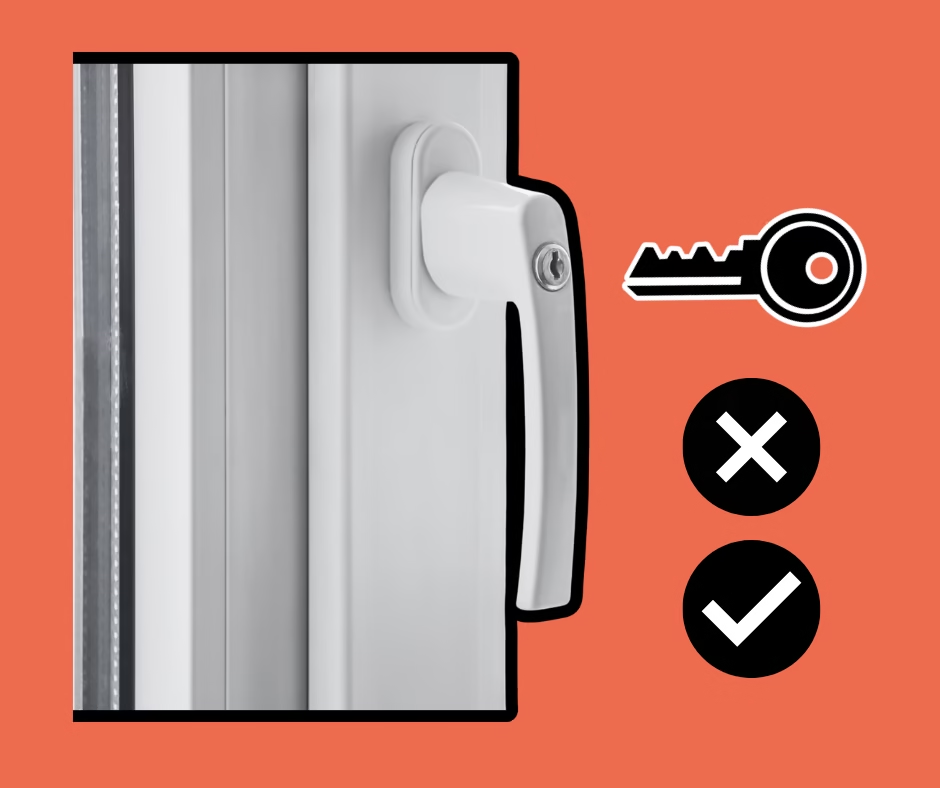
If your UPVC door handle feels loose or the key only turns when the door is held open, misalignment is often to blame. UPVC doors can “drop” slightly over time (hinge screws loosening) so the multi-point bolts miss their frame strikes. Seasonal weather makes this worse: UPVC expands on hot days and contracts in cold, so a door might jam only in high heat or freezing temperatures. In short, a sagging or swollen door will keep the latch and hooks from fully engaging. Below are the most common culprits – and what to check first – when a UPVC door won’t lock smoothly.
Common Problems with UPVC Door Locks
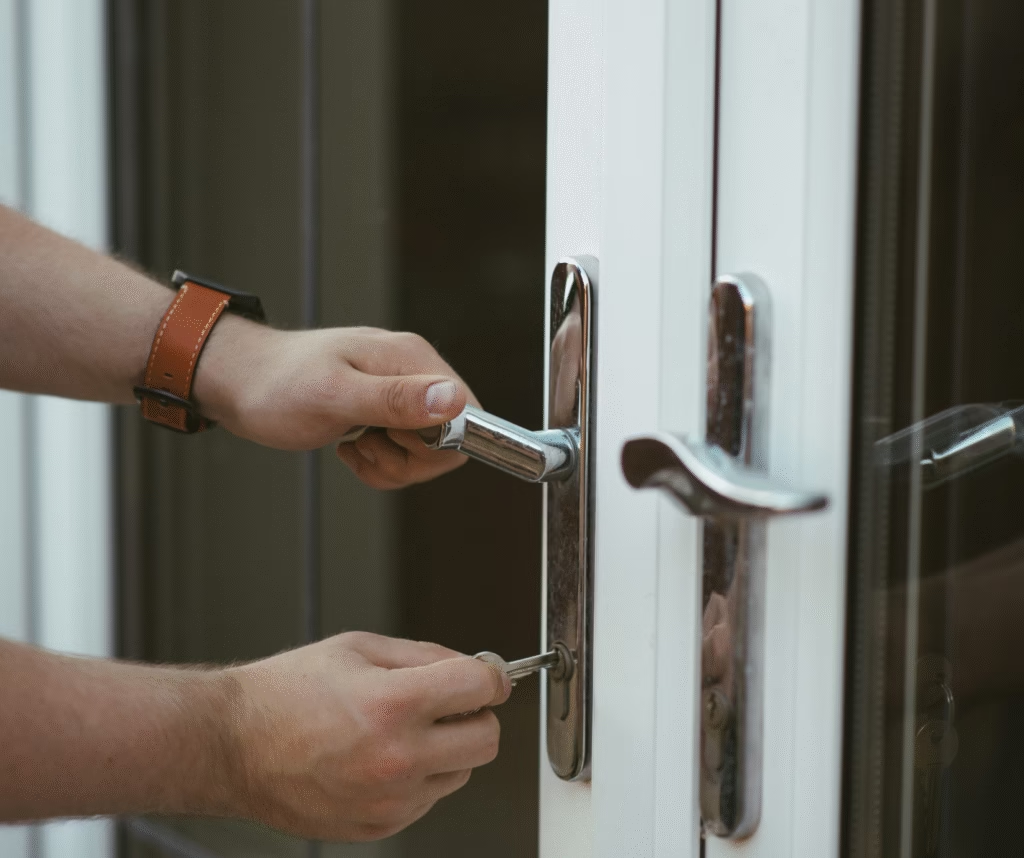
Sagging or misaligned door
Even a slight shift in the frame can stop the multi-point latch from catching. Many locksmiths note that if a door only locks when held open, it’s usually “dropped” on its hinges. Minor hinge or strike adjustments often restore alignment.
Warped or swollen frame
Heat and humidity can make a UPVC door or frame expand, while cold can shrink it. On very hot days you might feel the door press against the frame; in cold weather you may notice gaps. If the door works in some seasons but not others, thermal expansion is likely the cause.
Worn or broken lock mechanism
The internal gearbox (springs, cams and levers) has a limited life. After around 7–8 years of use, components can fail or snap. A telltale sign is a loose handle or a key that turns freely without moving bolts – the mechanism may be worn out.
Jammed multipoint bolts and hooks
A UPVC door often has several hooks or rollers that lock into the frame. Over time these can bend, clog with dirt, or mis-align if the door shifts. A single stuck hook can prevent the door from closing properly. Cleaning and lubricating the locking points usually fixes this.
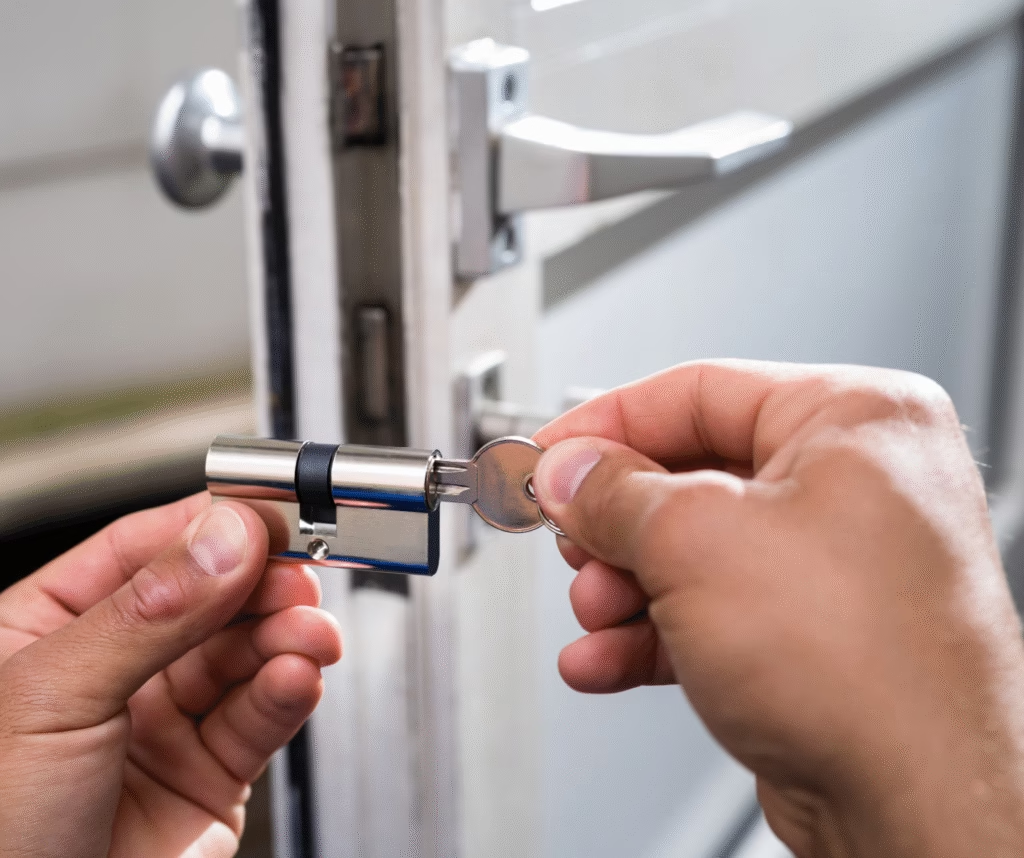
Faulty or incorrect cylinder
If the euro-cylinder (key barrel) is the wrong length or worn, it can jam the lock. A cylinder that’s too long or has failing internal springs may make the key stick or not turn fully. Modern anti-snap cylinders also have safety features; an old cylinder without these may not work reliably.
Lack of lubrication/maintenance
UPVC locks need regular care. Dirt and dried lubricants can gum up moving parts. You should use a dry PTFE or graphite-based spray on the lock (never thick grease inside). Over time, neglecting lubrication can make the mechanism stiff or “gritty.” Keeping the lock clean and oiled helps it last longer.
DIY Fixes to Try First
Before you call a locksmith, try these simple steps:
- Lubricate the lock. Apply a PTFE or graphite spray into the keyhole and on the moving parts. (Avoid heavy oils.) Often, a little lubricant frees up a sticking mechanism.
- Test alignment (door open vs closed). Try locking the door with it held slightly open. If it works open but not when shut, misalignment is the culprit. You can sometimes correct this by tightening or adjusting the hinge screws and loosening the strike plate screws to nudge it into place.
- Wiggle the key and handle. Gently jiggle the key while turning to free seized pins. You can also lift the handle up or down a bit as you turn – if that lets the lock engage, it confirms a drooping door (common advice is to lift the handle slightly and retry, which often works when the door has sagged).
- Check screws and debris. Inspect the strike plates on the frame and the latch on the door. Tighten any loose screws on the door handle, hinges or lock faceplate. Clear out visible dirt from the bolt holes and strike pockets – even a small piece of grit can block the mechanism.
If these DIY tips don’t do the trick, don’t force it. Forcing a jammed lock can break the key or twist the mechanism.
When to Call a Locksmith
If your lock is still jammed, the key won’t turn at all, or you hear grinding inside, it’s time for a professional. A qualified locksmith (like JCarter) can diagnose the exact cause and fix it without damaging the door. In an emergency (for example, you’re locked out, a key has snapped, or the door simply won’t close securely), call us right away. Our 24/7 emergency service in Poole, Bournemouth and throughout Dorset means we can be at your door quickly. Security is too important to gamble with. A locksmith can replace a failed mechanism or cylinder immediately, restoring your home’s security and saving you future headaches.
How JCarter Locksmiths Can Help
As your local Dorset locksmith, JCarter Locksmiths specializes in UPVC door lock repairs and replacements. We cover Poole, Bournemouth, Christchurch and the surrounding areas, so help is never far. Our locksmiths carry a wide stock of common UPVC lock parts (geared mechanisms, cylinders, multi-point strips, etc.), which means we often fix the problem on the spot. Whether your door needs a new high-security cylinder (anti-snap or TS007 rated) or the entire multi-point lock replaced, we have the expertise and parts ready. Because we’re veteran-owned and family-run, our service is fast, friendly and affordable. We also have no call-out fee in Bournemouth/Poole – you pay only for the work done.
Don’t let a stubborn lock compromise your safety. Book online or call JCarter Locksmiths now for UPVC door lock repair in Bournemouth, Poole, and all of Dorset. Our friendly team is ready 24/7 to get your door locking smoothly again.


